
Friday 13th September
We had a booking at the Kilmainham Gaol for 0930 but needed to arrive at 0915, so the night before I asked the hotel concierge how we paid for the tram and bus in the city – credit card was the answer, but later we found out this wasn’t the case.
We left the hotel and had breakfast in a cafe and then stepped onto the bus and presented my credit card – NO! we had to use cash – in fact, coins only!!! Fortunately the bus was every 10 minutes, so we just had time to get cash. We only had cards and shops wouldn’t give us cash, so I was pointed in the direction of an ATM. After 5 minutes of trying to get money from it, it finally reported it was out of cash and then Out of Order!
Vanessa had spotted a Taxi, so we hopped in and the driver asked how we were paying – card we replied. Unfortunately his card machine wasn’t working, so it had to be cash only, so the day wasn’t starting well. Can you take us via another ATM then? – Yes.
The first ATM he stopped at was also empty; the second was also out of order, but 3rd time lucky I got the cash we needed and eventually arrived at the gaol in good time.
Short history lesson – reason why the gaol was so important.
The Irish rebellion began on Easter Monday, April 24, 1916 and lasted for six days and was led by the Irish Republican Brotherhood (IRB), a revolutionary society within the Irish Volunteers, along with the Irish Citizen Army. The rebels seized strategic buildings in central Dublin, including the General Post Office, which they used as their main headquarters (you can still see the bullet holes in the outer walls). The rebels used the First World War as an opportunity to strike for an Irish independence, believing that “England’s difficulty is Ireland’s opportunity”. The Easter Rising was a seminal moment in modern Irish history, helping pave the way to the nation’s independence in 1922. But the leaders were all sentenced to death by firing squad in the gaol.
Note: You must book a tour ahead of your visit as it always seems to sell out.
The first room you come to is the court room (which we later discovered, was always adjacent to, or inside a prison’s walls).
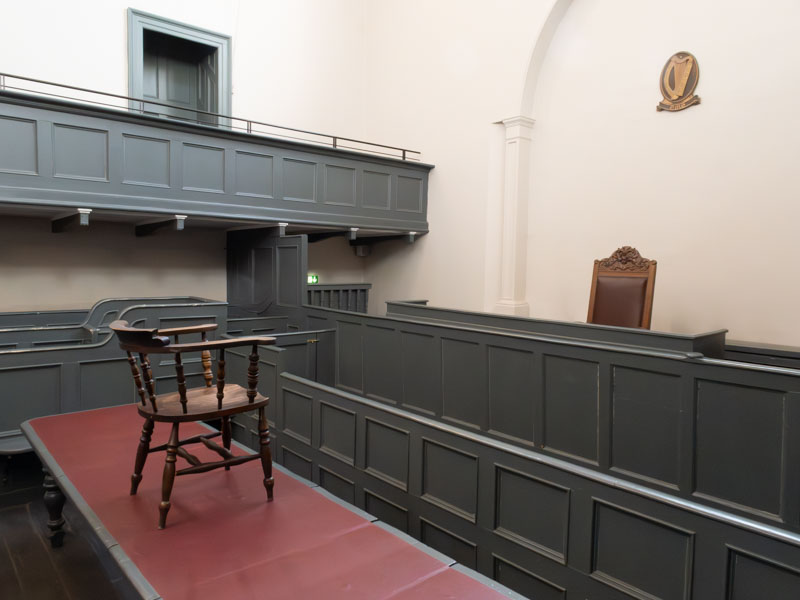

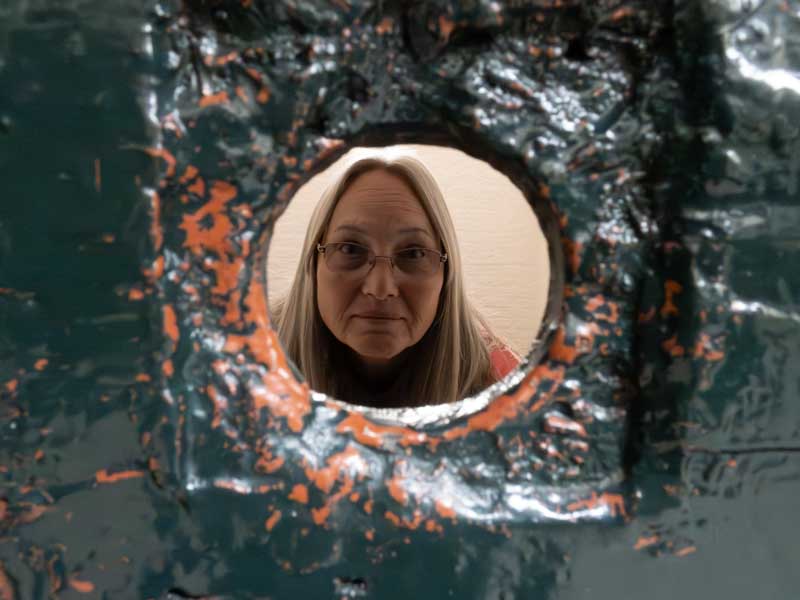
After sentencing, the prisoners were ‘taken down’ the stairs (covered here by glass) and into the prison. The culprit in the photo definitely looks guilty and should be sent down.
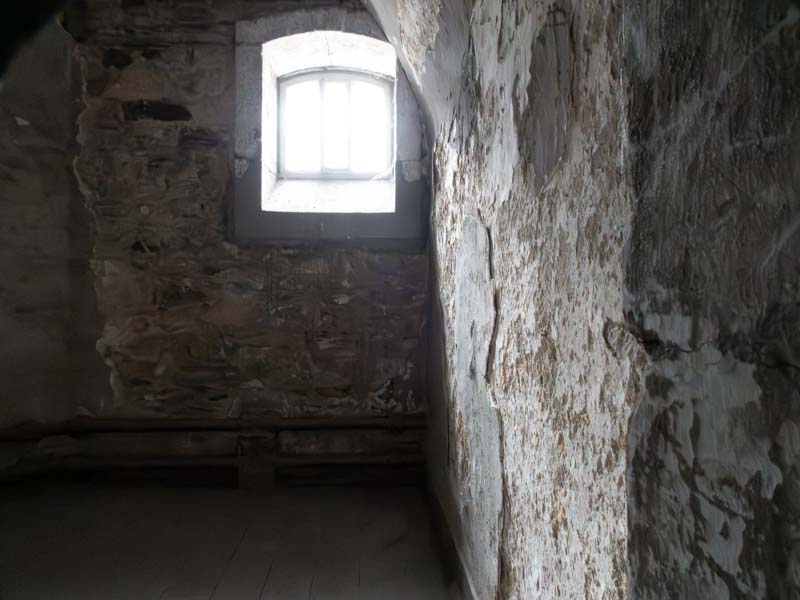
All the cells were designed to hold one person, but during the Irish famine when many people were convicted of stealing food, they held up to 3 men whilst women and children were held in the corridors just outside the cell doors.
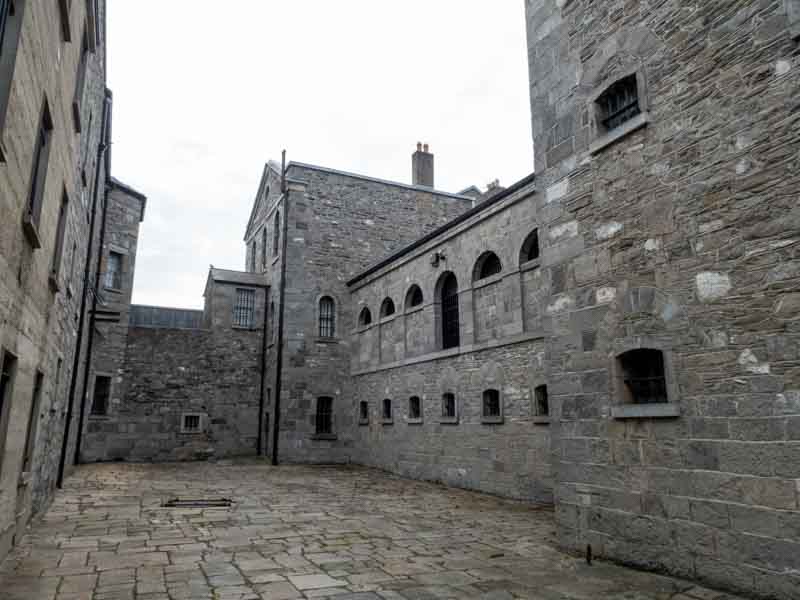
Later the prison was modernised with a new cell block which required less prison staff to oversee the inmates.


You may recognise the central hall as it was later used in films (e.g. The first Italian Job) to raise money to help renovate the prison.
The tour goes into detail about the leaders of the Easter Uprising and covers what happened to other prisoners, including one child of 3 years old who was sent to prison for 1 week for stealing an apple (during the famine). Many prisoners were also held here awaiting transport to a penal colony – Australia.

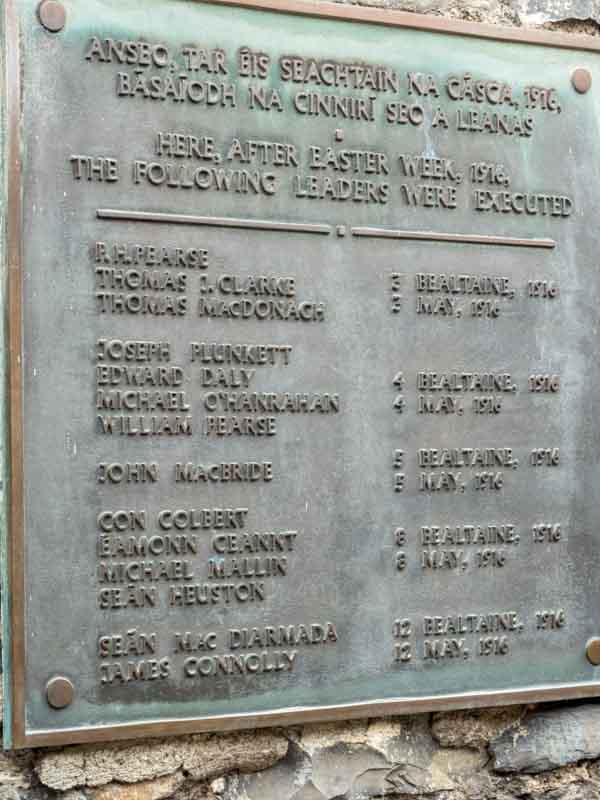
The plaque shows the names of the executed prisoners. The last name ‘James Connolly’ was badly injured and held in the Dublin Castle Hospital to keep him alive so he could be executed.

James Donnelly was brought into the yard (upper right image) through these gates and strapped to a chair where the small cross is placed and shot by firing squad.
After this we were led into the museum to see many of the artifacts relating to the history leading up to Irish independence.

After leaving the gaol we realised we were only 20 minutes walk from the Guinness factory, so Vanessa quickly booked us tickets on her phone. The tour is self guided, taking you up to floor 7 where you can then enjoy your pint of Guinness.

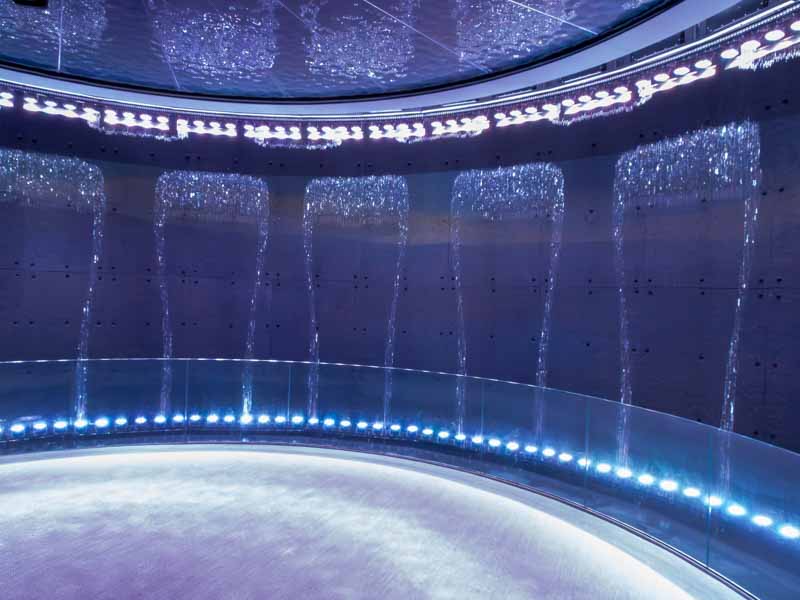
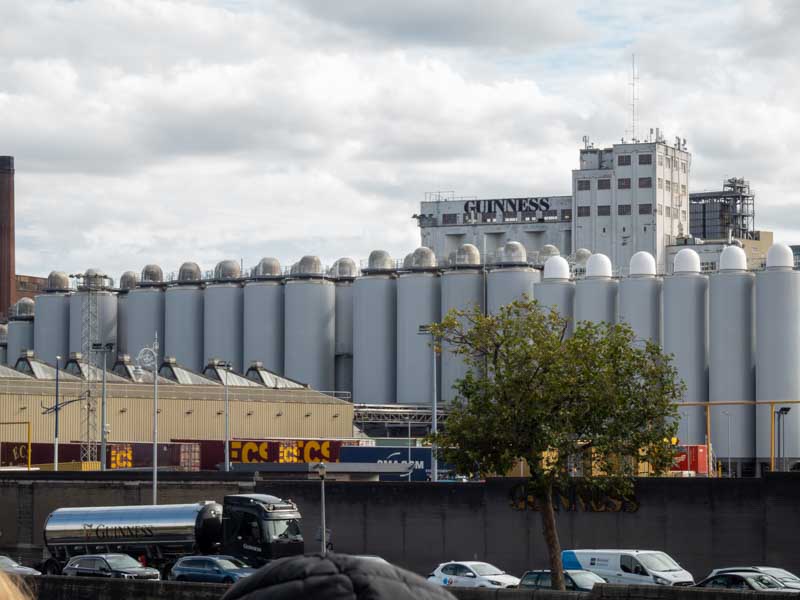
As the tour continues upwards to floor 7 the process of making Guinness is described, but you are not in the actual brewing area. It was interesting and glad we did it. However I will say the pint I had wasn’t as smooth as those we had in the various bars in Dublin, but still better than we get in the UK.
There are snack bars and restaurants inside the brewery, so we had a bite for lunch and spent a few Euros in the shop on the ground floor before leaving to get on the Hop-on Hop-off bus which as you might expect calls at the brewery.
We used the ‘City Sightseeing Dublin’ service which has an app (QR code on the paper map they provide). This keeps you up to date with bus locations and approximate time to the next stop. So it proved quite convenient to get off; wander around an area and rejoin the next bus without having to wait 30 minutes (in case you just missed one).
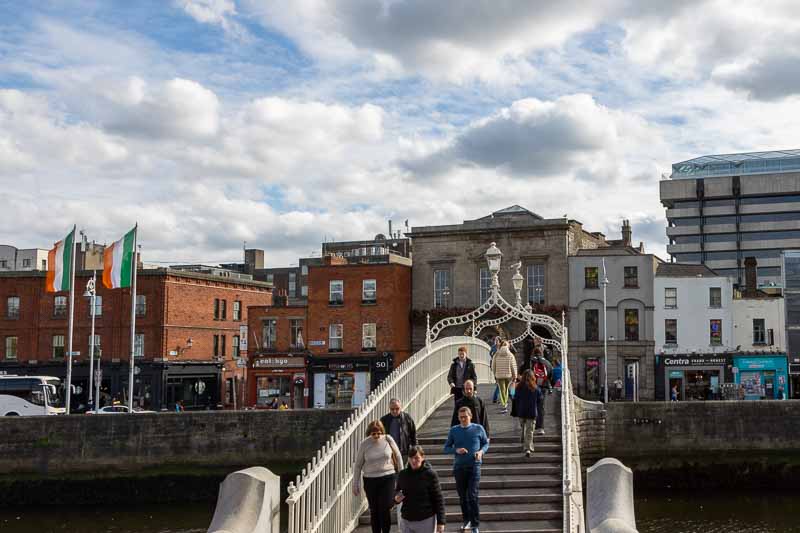

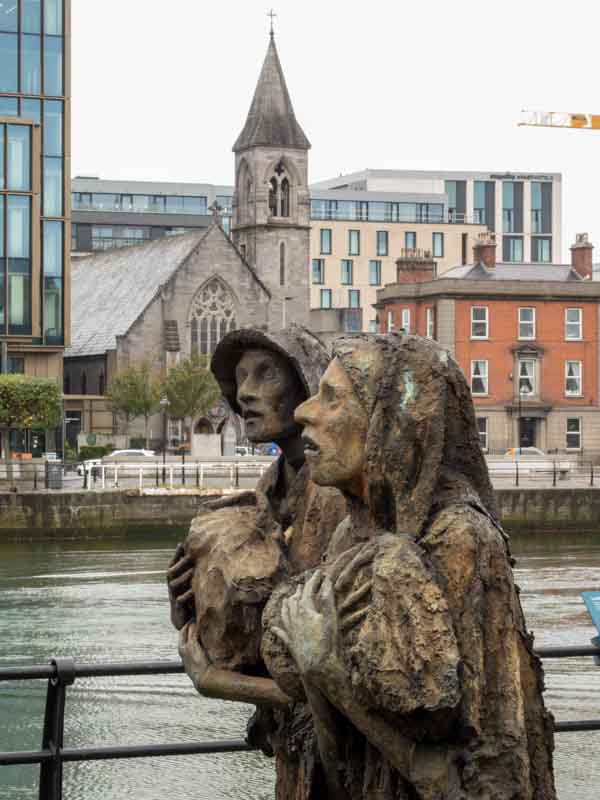
Ha’penny Bridge and the Famine Memorial along the banks of the river Liffey.
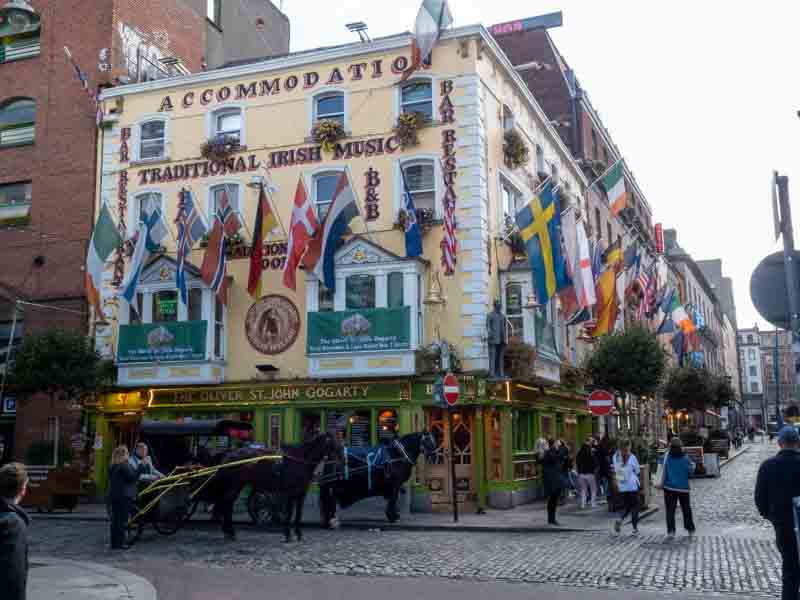
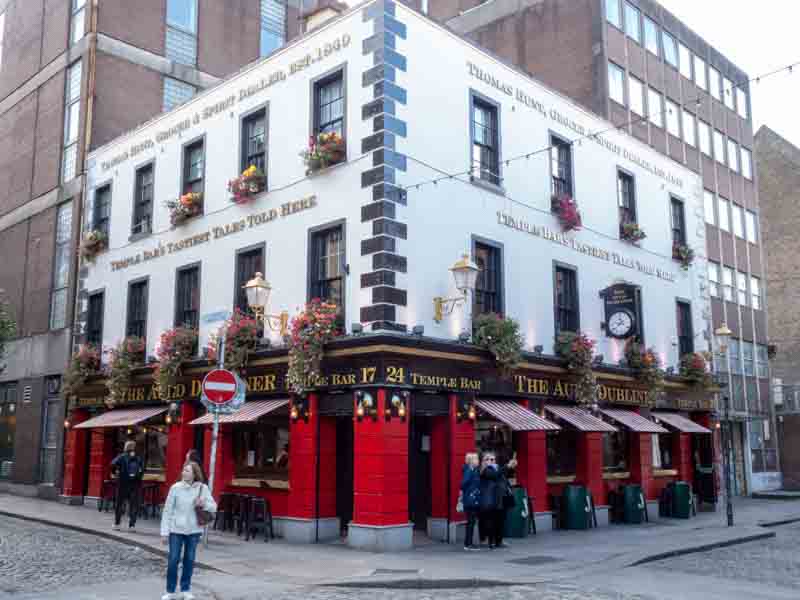
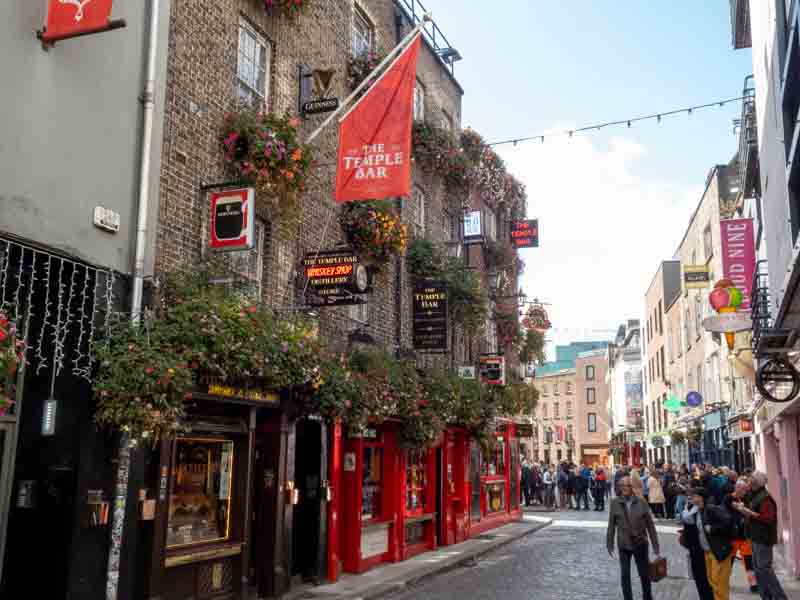
After grabbing camera and tripods again from the hotel we headed back to Temple Bar for some early evening shots of the pubs.
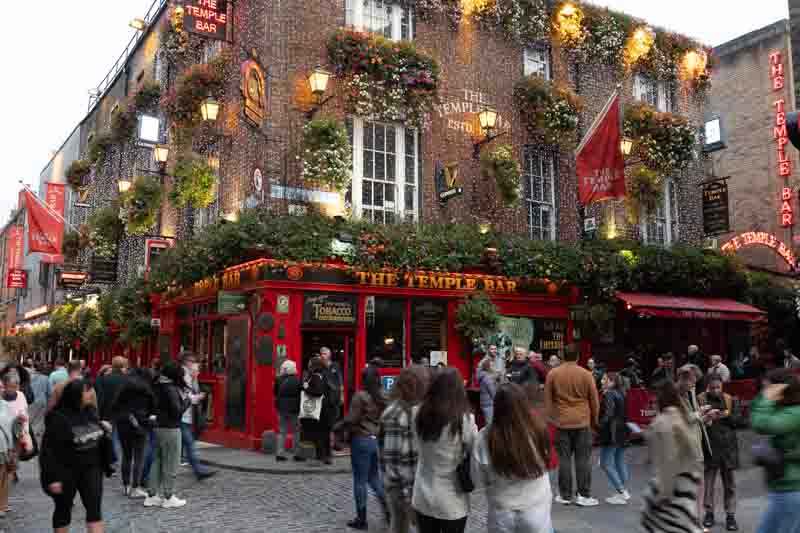
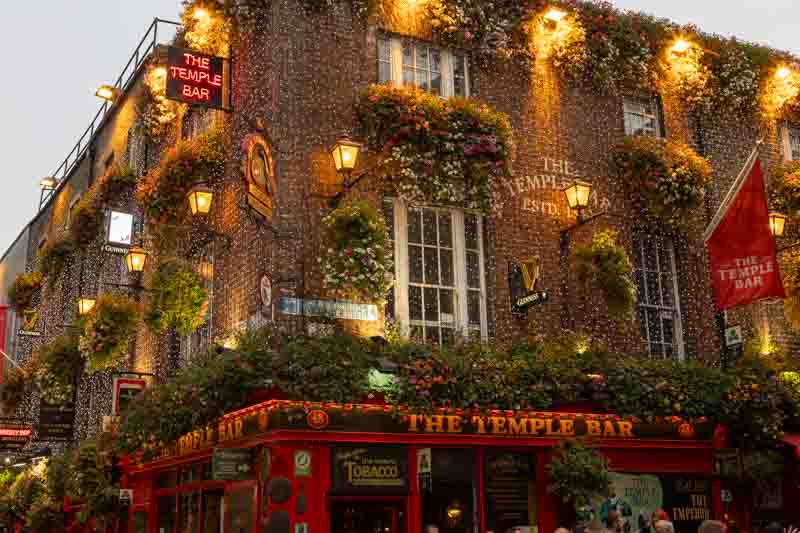
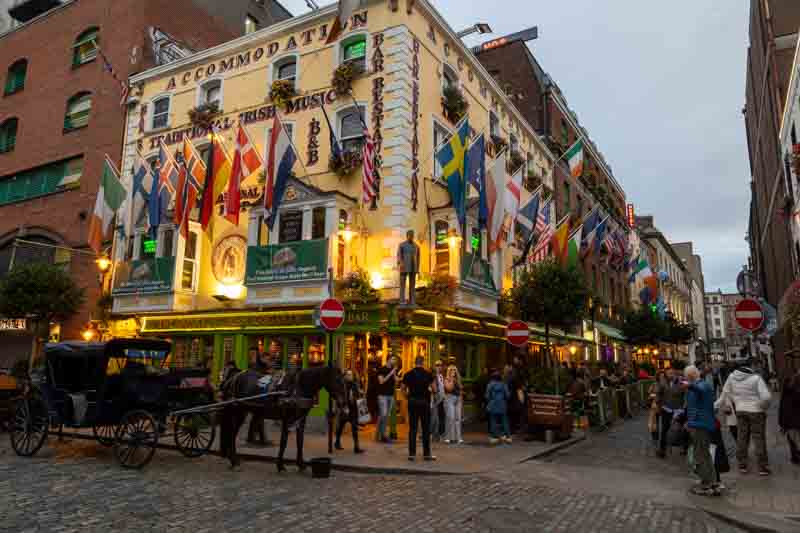
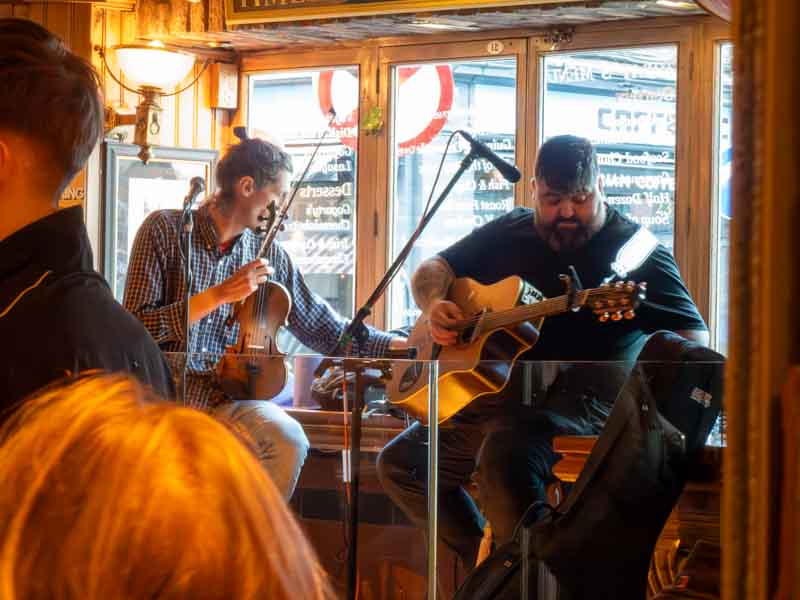
This time we had our evening meal in the Auld Dubliner. The meal was great but the music wasn’t to the same standard as in the bar opposite. But as there are so many different artists it’s not surprising some will be less popular. But it still made for an entertaining evening. Afterwards we nipped back into the St John Gogarty for another pint (with better artists) – the pub was full with several birthday and hen parties in progress.

















 Bateson's Travel log