Having another go at bird photography

The Autumn colours have finished without us getting any real opportunity to get out more as we have grand children duties and our aging dog has had two bouts of Vertigo which made her very unstable and couldn’t walk far. So we’ve put any more motorhome trips and days out on hold. So we aim to grab a few hours when we can and ventured out yesterday to Denny Wood in the New Forest.

At least we could see the birds in the trees with the leaf canopy gone, but the challenge was bringing them down to our level, so we found a few tree stumps and baited the area with seeds and waited patiently.

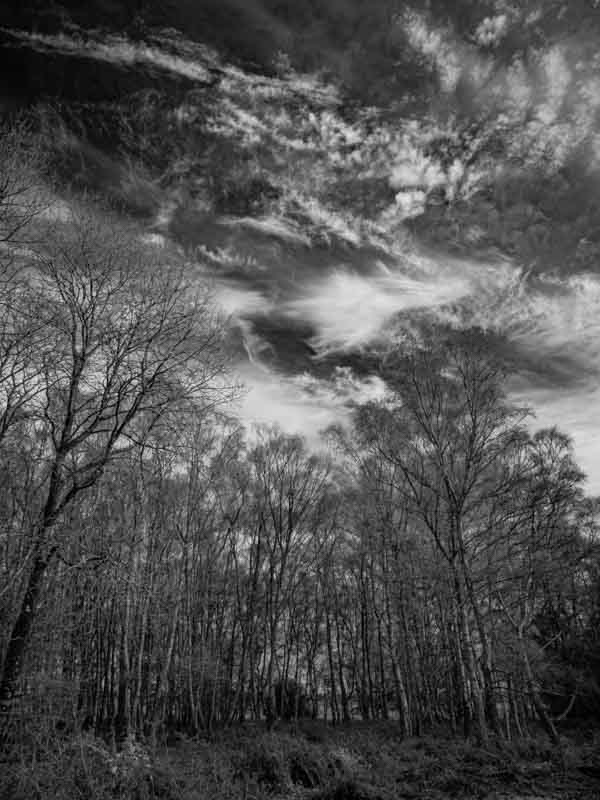
While we waited I took a few shots with the Infrared (IR) camera which I had previously packed away for the winter. I attended a talk earlier in the week by Paul Mitchell (www.paulmitchellphotography.co.uk) on Infrared photography who took excellent images throughout the whole year, so I thought I’d do the same. The images below definitely show off the impact with IR on the sky even though the trees are bare.

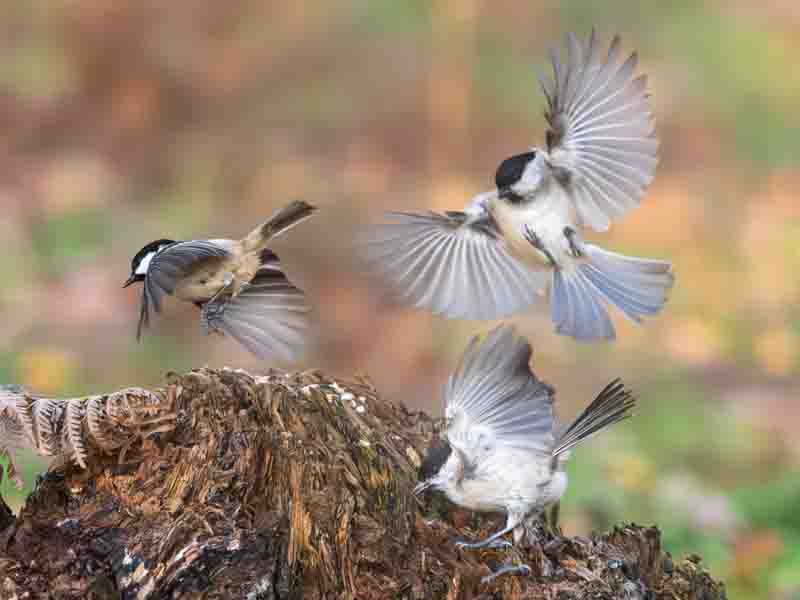
After 30 minutes the birds started to appear, initially in 1’s and 2’s then sometimes 4 or five at a time.
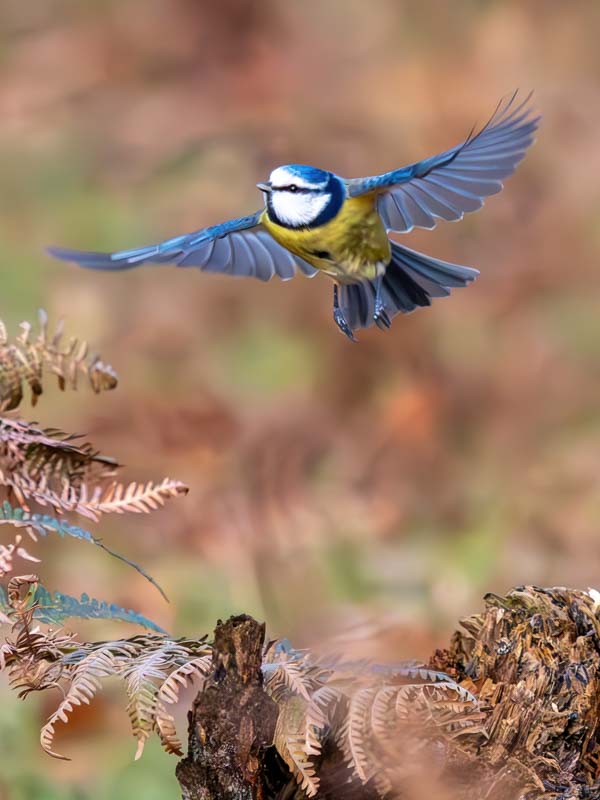
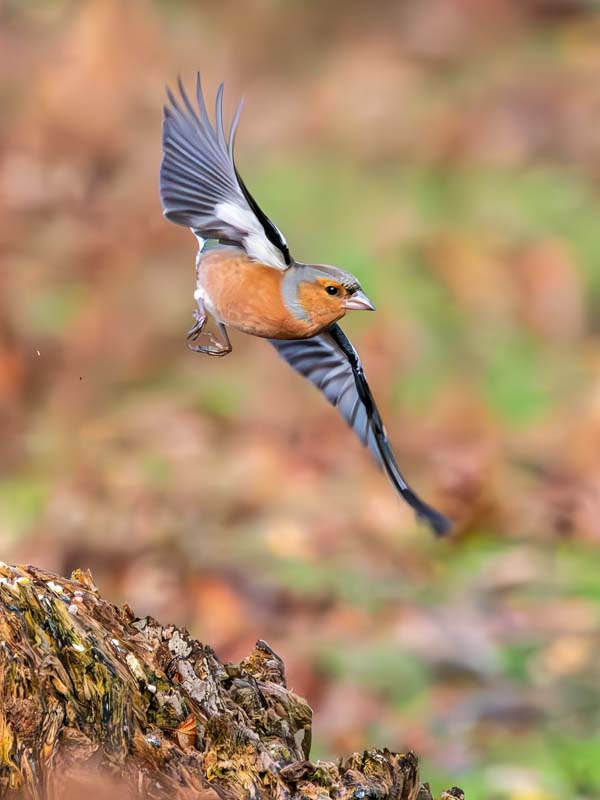
I was using a shutter speed between 1/1600 and 1/2500 with apertures between F5.6 and 7.1. The light level wasn’t great so the ISO setting was always quite high which resulted in noisy images which had to be recovered during post processing.

As soon as multiple birds appear the difficulty is getting them all in focus with a narrow depth of field. So I was shooting at 50 frames a second and searching for images where the birds are in a similar focal plane. I ended up keeping 120 images from about 9000 taken in the 90 minutes photo shoot.
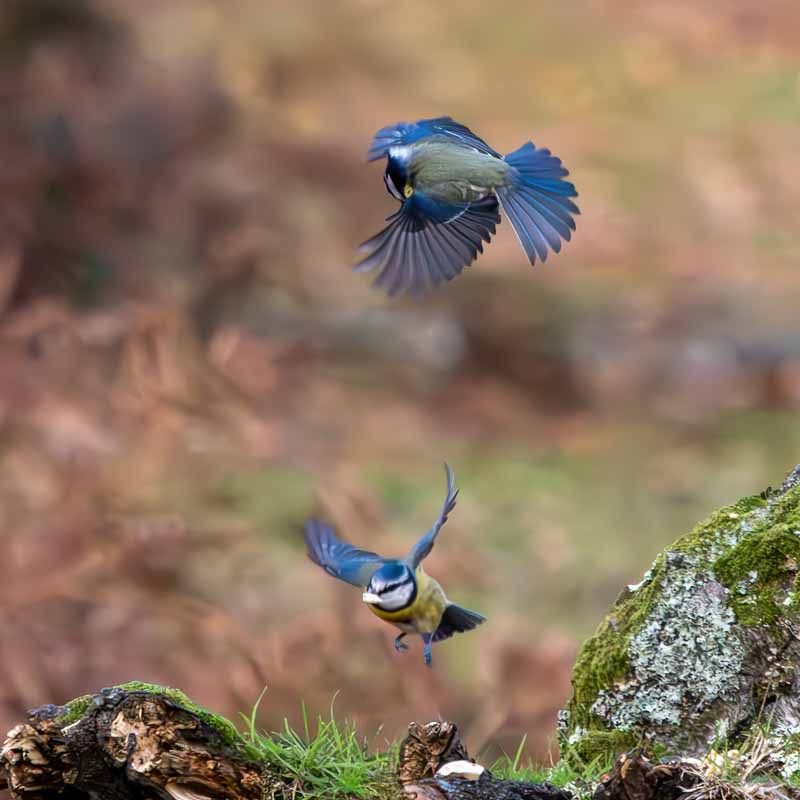
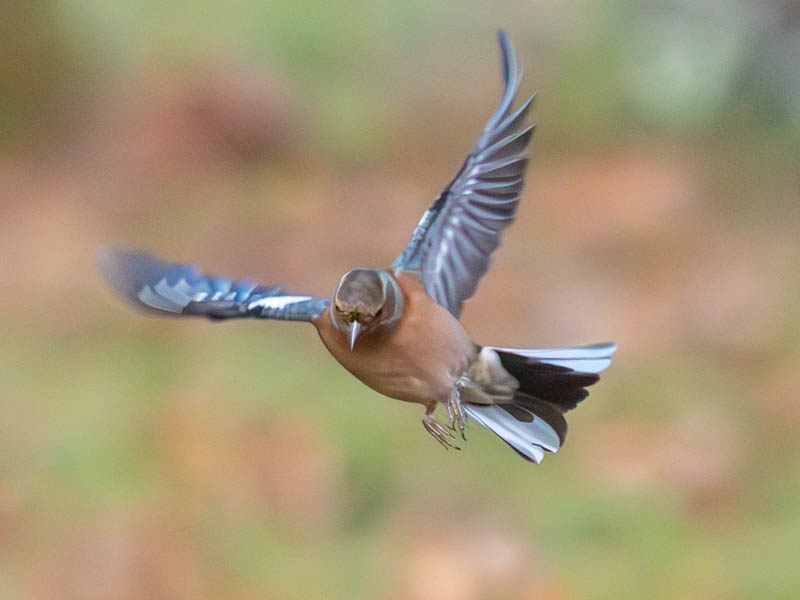
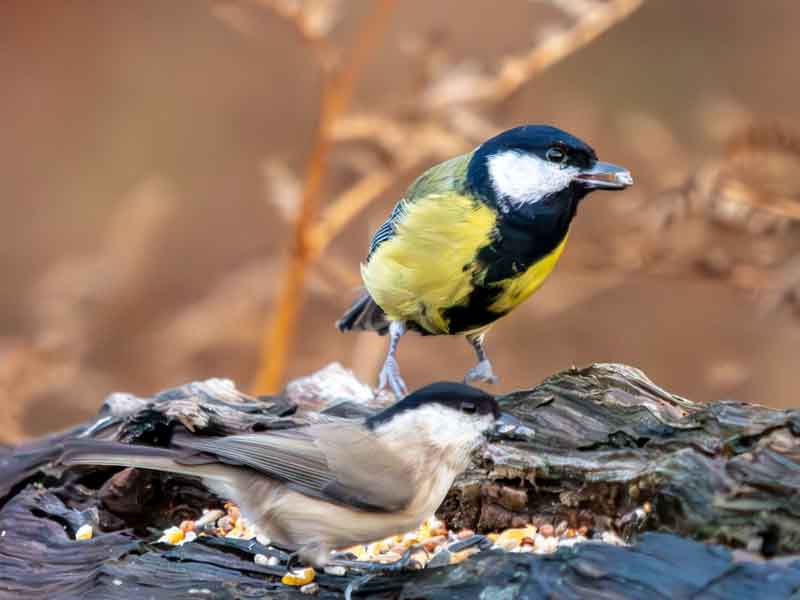
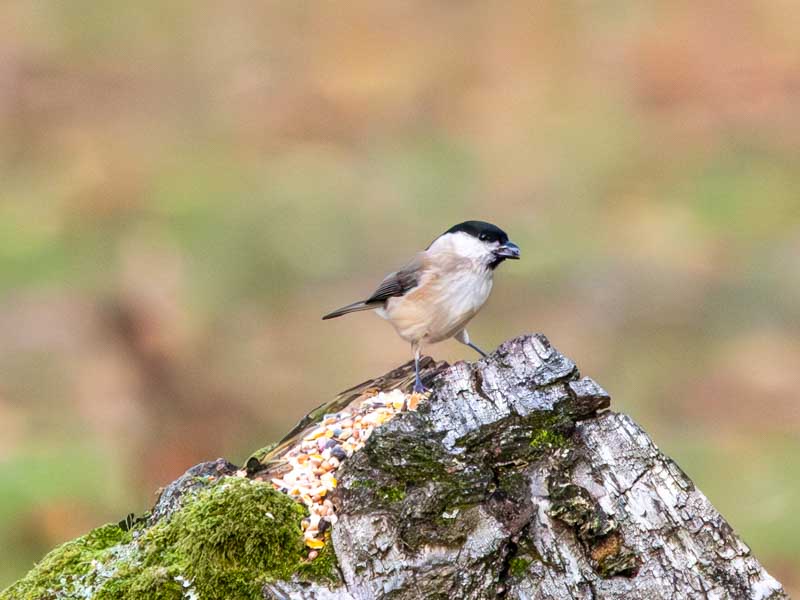
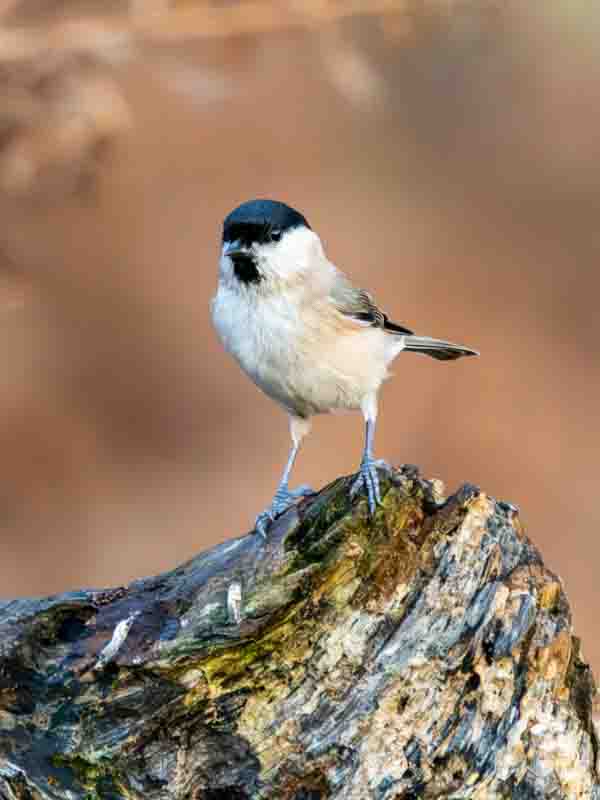
I was surprised with the variation of species which included Chaffinch, Blue Tit, Great Tit, Coal Tit, Marsh Tit and a Nut Catcher. Robins where in the trees, but didn’t want to be photographed.

Ideally we would have liked more light, so may try again when the light improves. For the technically minded, I was using the ‘pre-capture’ facility of the OM-1 Mk2 with a pre-cap2 setting. With the shutter button half depressed the camera buffers a preset number of images but doesn’t save them to the SD card until the shutter is fully depressed. Once the shutter is fully pressed the camera saves the pre-capture frames and continues to capture until the shutter is released. This feature gives the photographer a greater chance of capturing the inflight images.
Autumn

Until now I’ve only posted on this blog with our holiday trips, but why stop there I thought. We are trying to spend a little more time outside with the cameras, so when there is an opportunity I decided to broadcast through this blog. Apologies now if these occasional extra posts don’t interest you.

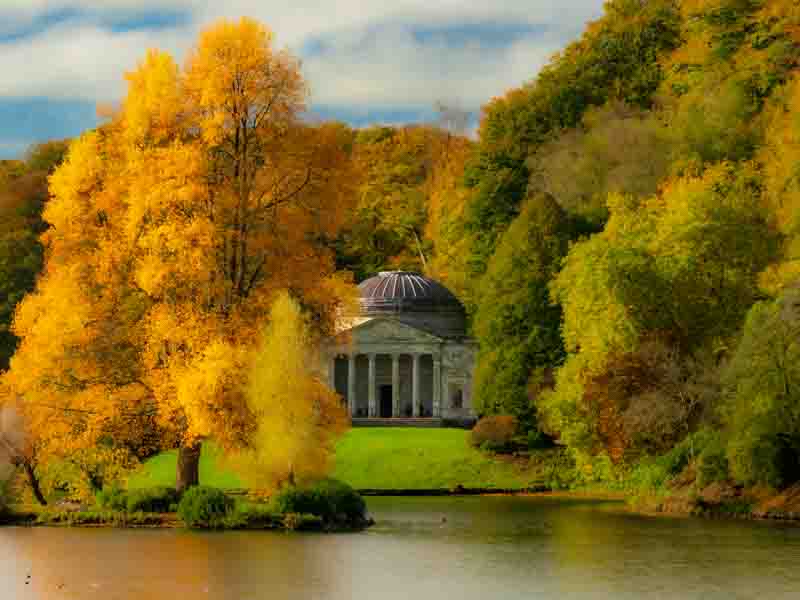
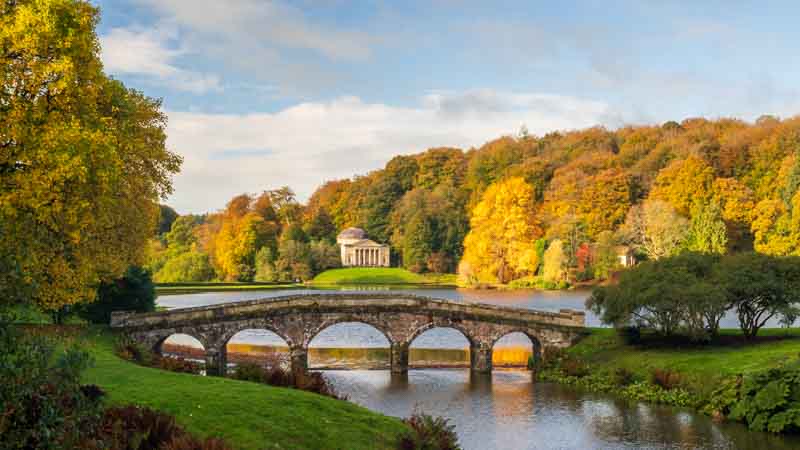
It’s autumn and the colours in the New Forest still don’t quite seem intense enough, so we headed off to Stourhead which is managed by the National Trust. On arrival we discovered that they were opening earlier than 10 am for amateur photographers for a few days (but you need to book). We arrived at 10 am and ventured into the gardens. If you’ve not been there then this is the time to go as the first image you are presented with is this….

You do need the sun on the tree canopy to make the most of the colours together with a minor amount of post processing modification. I also had a polariser fitted to the lens which helps manage reflections and saturate the colours.

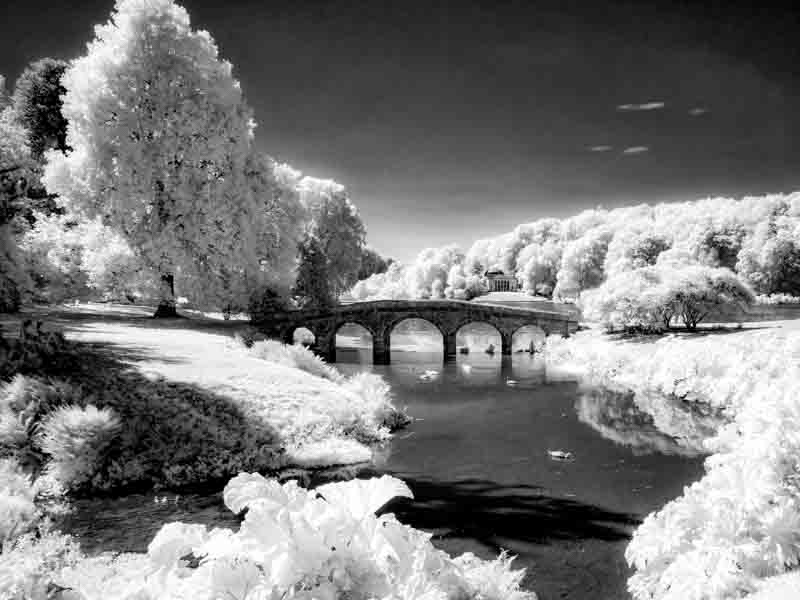
As a comparison, we did visit Stourhead in the middle of summer for an entirely different experience. Although the landscape was similar the strong lighting required an entirely different treatment – infrared.

Olympus camera modified for Infra-red

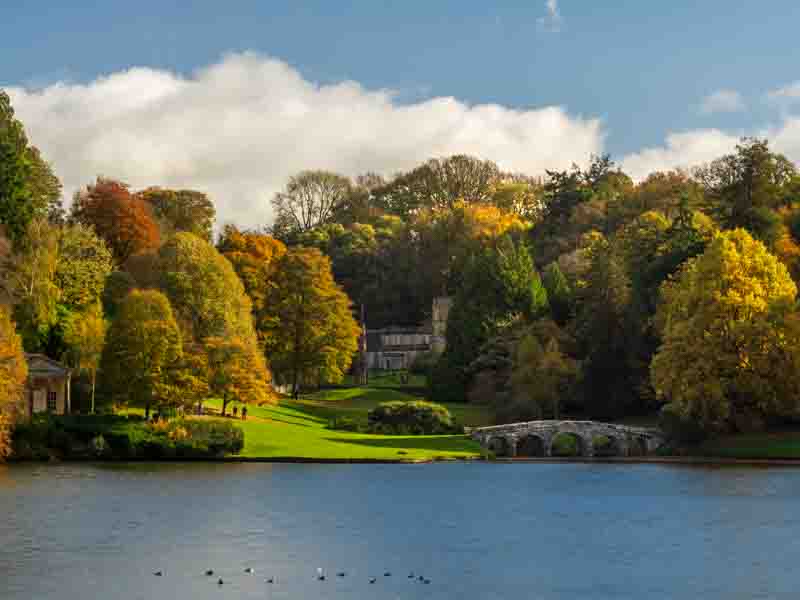
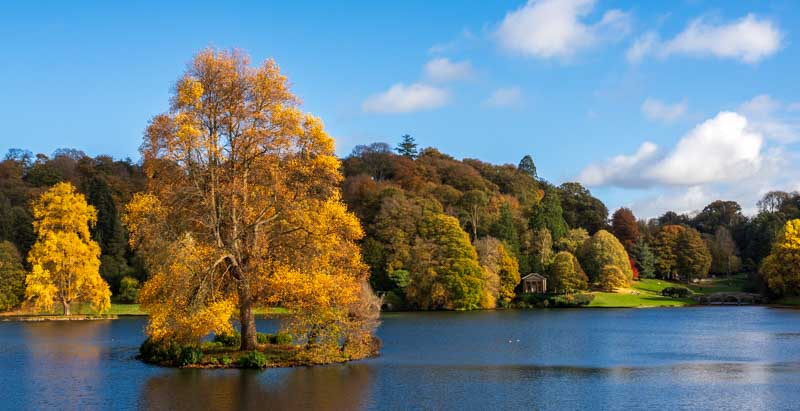
Back to Autumn – you need strong lighting from a low angle for the best images of the canopy and today was a good day, although there was a risk of showers. The low angle of the sun will also introduce larger areas of shade, so some additional post processing manipulation is required as in the image below taken from the opposite side of the lake.

The exposure in the central area needed lifting with the church and bridge brightening a little. But it still lacks the impact of the first image. So back to the other side and walking anti-clockwise around the lake.

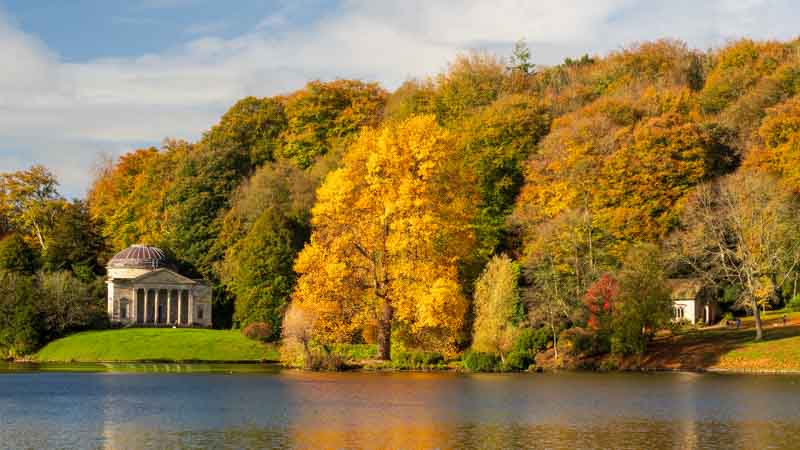
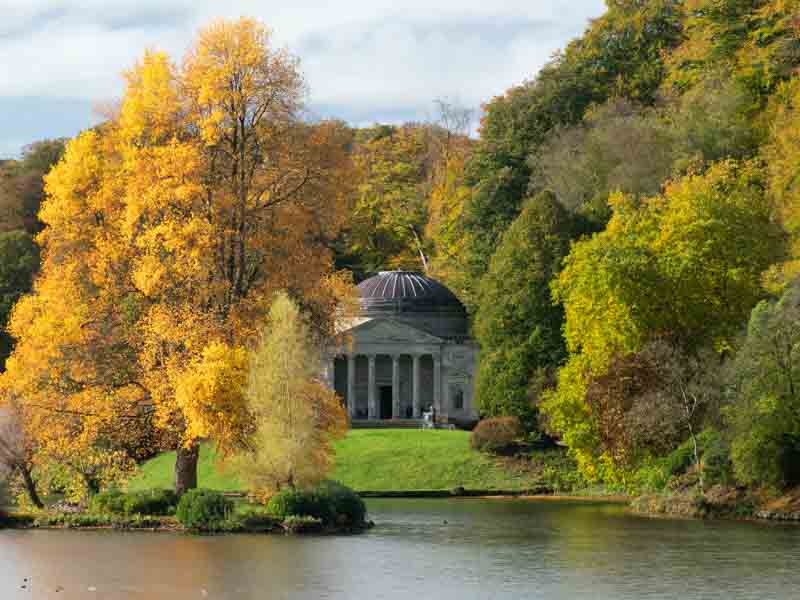
The large golden tree in the centre is actually on an island, so moving further round the lake gives us another perspective. But for comparison I’ve presented the image without post-processing followed by a processed image

Firstly I used a polariser and a 6 stop filter to saturate the colours and soften the water with a 1.6 second exposure, then masked out the Pantheon building and softened the trees by reducing the clarity slider in Lightroom, which has introduced a different effect to the image.

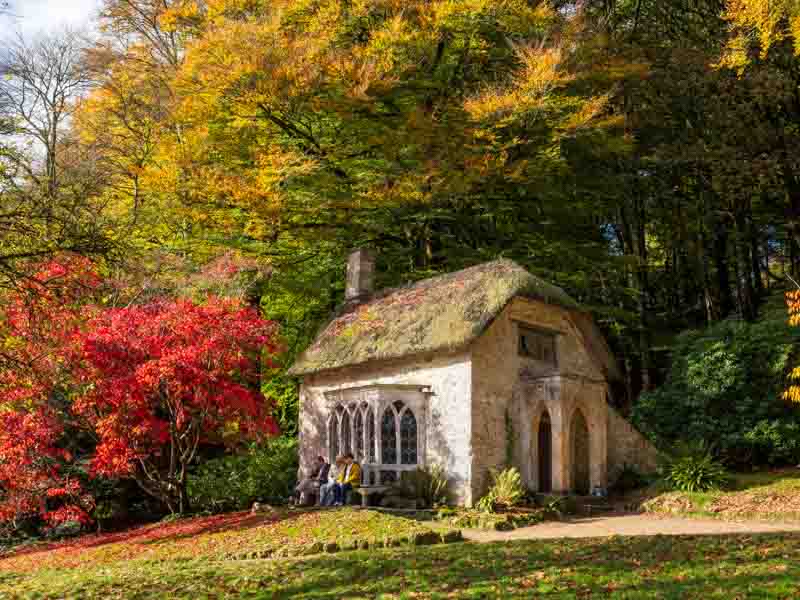
Continuing around the lake to the chapel and waiting for most of the people to move out of the way (as there were a lot) we have…

There were 2 extra people sitting on the bench and other objects that needed removing with the Lightroom Ai removal tool – so I can’t really claim all the credit for the cleaner image.

Finally one last image as we walked back towards the bridge

This was taken not far from the Pantheon and out of curiosity I used my Sun Surveyor app and checked the time the sun would have cleared the trees to the east and I’d estimate about 0900 to 0930, so no real need to book for the early morning photo experience.

Hopefully you’ve enjoyed the images and make the journey to Stourhead (near Warminster) at a future date. For us we headed a few miles down the road to see Vanessa’s sister and husband and ended the day in the pub. So a great day.